
Local SEO vs Google Ads: Which Is Better for Local Businesses?
A clear-eyed comparison of local SEO and Google Ads for local businesses, covering cost, speed, trust and which channel fits which situation.
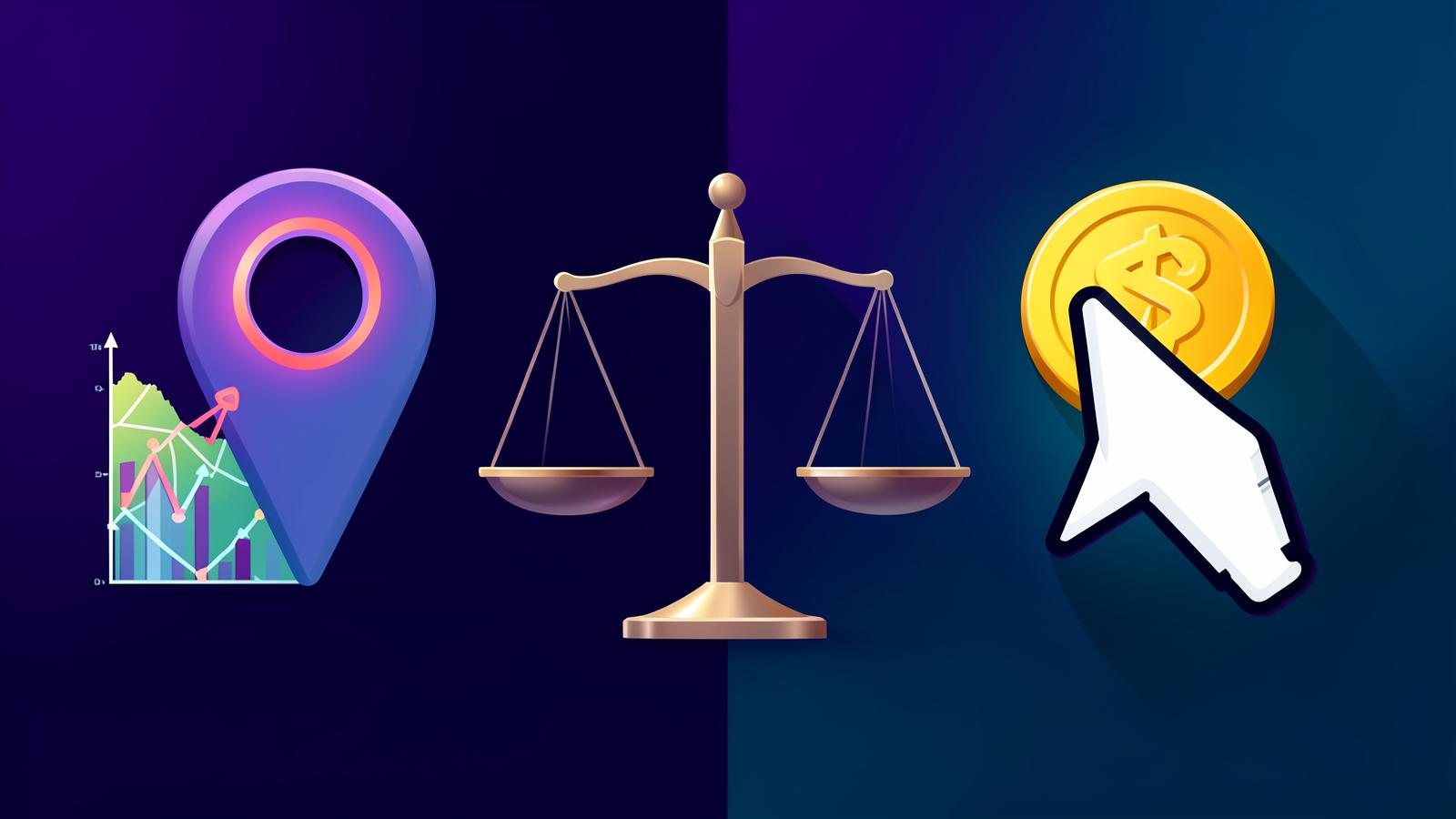
Almost every local business owner eventually asks the same question: should we invest in local SEO, run Google Ads, or do both? It is a fair question, because the two channels compete for the same screen real estate above the fold when someone searches for a nearby dentist, plumber or restaurant, yet they work in fundamentally different ways and reward different kinds of businesses.
Local SEO earns visibility in the organic local pack and Google Maps through relevance, proximity and prominence signals built up over months. Google Ads buys visibility instantly through an auction, charging per click for placement above or alongside those organic results. Neither approach is inherently superior; the right choice depends on your budget, timeline, margins, competitive landscape and how urgently you need customers walking through the door.
This guide breaks down how each channel actually works, what it costs in time and money, and how the decision tends to play out differently for a dentist in Chandigarh, a plumber in Mohali, an electrician in Panchkula, or a restaurant competing in the far more crowded and expensive Delhi NCR market. By the end, you should have a realistic framework for deciding where your next marketing rupee is best spent.
How Local SEO Works
Local SEO is the practice of earning visibility in Google Maps, the local three-pack and organic local search results without paying for individual clicks. It relies on a combination of a fully optimized Google Business Profile, consistent citations, customer reviews, on-site content and backlinks that together signal to Google that your business is relevant, nearby and trustworthy for a given search.
Because these signals compound over time, local SEO tends to be slower to show initial results but produces visibility that persists without an ongoing per-click cost. A well-optimized Google Business Profile combined with strong on-site local content, the exact fundamentals we cover in our companion piece on how to rank higher on Google Maps, can keep generating enquiries for years with only maintenance-level effort.
- Google Business Profile completeness and category accuracy drive Maps visibility.
- Citations and NAP consistency across directories build location trust.
- Reviews influence both ranking and click-through once you appear.
- On-site service and location pages capture organic search intent beyond Maps.
How Google Ads Works
Google Ads operates on a real-time auction: you bid on keywords or let automated bidding target a goal, and you pay a cost per click whenever someone clicks your ad, regardless of whether they convert into a customer. For local businesses, ads can appear as standard search ads with location extensions showing your address and distance, or, for select service categories, as verified local service-style listings that appear above regular search ads.
The defining advantage of Google Ads is speed. A campaign can go live within days and start generating calls and form fills almost immediately, which makes it attractive for businesses that need customers now rather than in three to six months. The trade-off is that visibility disappears the moment you stop paying, and every click has a direct, measurable cost attached to it.
Google Maps Visibility: Organic vs Paid
The local three-pack that appears with a map at the top of local search results is almost entirely organic, driven by Google Business Profile signals rather than ad spend. You cannot directly buy your way into the classic Maps three-pack the way you can buy a search ads position.
Where paid visibility does intersect with Maps-adjacent search is through standard search ads with location extensions, which show your address, phone number and distance directly in the ad. For searchers who are further along in their decision and specifically comparing options, seeing both an organic Maps listing and a well-targeted ad from the same business can reinforce credibility rather than feeling redundant.
Organic Local Rankings and Long-Term Equity
Ranking organically for 'near me' and city-specific searches builds an asset that belongs to your business rather than to a rented ad slot. Once a service or location page ranks well, it can continue attracting enquiries with minimal incremental spend, and the effort compounds as you add more optimized pages, citations and reviews.
This is precisely the strategy we walk through for the Tricity and Delhi NCR markets in our guide to local SEO services across Chandigarh, Mohali, Panchkula and Delhi, where organic visibility is often the more sustainable path for businesses competing against well-funded regional chains.
Cost Considerations: Time Investment vs Ad Spend
Local SEO's costs are mostly front-loaded into time and effort: optimizing your profile, building citations, generating reviews and creating content. Once rankings stabilize, ongoing costs drop to maintenance, making the long-run cost per lead trend downward the longer you invest.
Google Ads costs scale directly with clicks and never disappear; cost per click varies heavily by industry, competition and location, and tends to be noticeably higher in dense, high-competition markets like Delhi NCR than in comparatively less saturated Tricity markets such as Chandigarh, Mohali or Panchkula. A dentist bidding on high-intent keywords in a metro market will typically pay considerably more per click than one in a smaller city, simply because more competitors are bidding for the same searchers.
| Factor | Local SEO | Google Ads |
|---|---|---|
| Time to first results | Weeks to months | Days |
| Ongoing cost structure | Time and maintenance | Per-click, continuous |
| Visibility once you stop | Persists, may decay slowly | Stops immediately |
| Control over targeting | Indirect, algorithm-dependent | Direct, granular |
| Long-term cost per lead | Tends to decrease over time | Stays roughly constant or rises with competition |
Short-Term Needs vs Long-Term Growth
A new business with an empty calendar and rent due next month rarely has the luxury of waiting six months for organic rankings to mature. In that scenario, Google Ads can bridge the gap by generating leads while local SEO work builds in the background.
An established business with steady baseline demand, on the other hand, is often better served by prioritizing local SEO, since the marginal cost of an additional organic lead falls over time while the marginal cost of an additional paid click generally does not.
Lead Generation Quality and Volume
Google Ads gives you precise control over volume: increase the budget and, within reason, you get more clicks and enquiries, which makes it useful for businesses that need to hit a specific number of jobs or bookings in a given month. Organic local traffic volume is harder to control directly since it depends on rankings you influence but do not fully command.
Lead quality comparisons are more nuanced than either channel's advocates usually admit. Ads can attract price-comparison clicks from people who are still shopping around, while organic clicks from someone who scrolled past ads to click a maps listing often signal stronger trust, though this varies by industry and by how well the ad campaign itself is targeted and written.
Trust and Credibility Signals
Many consumers have learned to recognize the 'Sponsored' label on ads and, for some purchase decisions, actively scroll past paid results to organic ones, particularly for higher-trust categories like healthcare or home services where reviews and reputation matter heavily.
That said, a business appearing in both the organic pack and as a well-crafted ad often benefits from a compounding trust effect, since seeing a name twice, once organically and once as an ad backed by strong reviews, can reduce hesitation for a searcher who is comparing several nearby options.
The Role of Google Business Profile in Both Channels
Google Business Profile is the backbone of local SEO, but it also indirectly supports paid campaigns, since a strong profile with recent reviews and accurate information reassures a searcher who clicks an ad and then checks your profile before calling. A neglected profile can undercut even a well-optimized ad campaign by eroding confidence at the final decision point.
Investing in a fully optimized profile, the focus of our Google Business Profile SEO service, therefore benefits whichever paid or organic strategy you choose, and it is rarely wasted effort even if your primary channel shifts later.
Understanding Local Search Intent
Local searches range from broad research ('best restaurants in Chandigarh') to high-intent, ready-to-act queries ('emergency electrician near me'). Google Ads tends to perform best against the highest-intent, often urgent queries where the cost of a click is easily justified by the value of winning that customer immediately.
Local SEO tends to capture a wider spread of intent, including research-stage searches where someone is comparing multiple businesses before deciding, which is where detailed service pages, reviews and photos on your Google Business Profile do the persuading over days rather than seconds.
Scalability and Seasonality
Google Ads scales up and down instantly, which makes it well suited to seasonal businesses such as wedding planners needing a surge of visibility during peak booking months, or HVAC and AC companies wanting extra volume during the hottest weeks of summer.
Local SEO scales more slowly in both directions; you cannot switch it off for the off-season without losing momentum, but you also cannot ramp it up overnight for a short seasonal push. Businesses with predictable seasonal spikes often use ads tactically around those windows while letting local SEO carry steady baseline demand the rest of the year.
When Local SEO Makes More Sense
Local SEO tends to be the stronger primary investment for established businesses with realistic runway, healthy margins on repeat or high-value services, and a genuine intention to operate in the same location for years. It also suits businesses in categories where trust built through reviews and organic presence heavily influences the decision, such as dental practices or real estate agents.
- You can wait a few months for compounding results rather than needing leads this week.
- Your margins support a long-term investment rather than an immediate cost-per-lead payoff.
- You operate from a fixed, permanent location worth building durable authority around.
- Your competitors are underinvesting in Google Business Profile and on-site local content.
When Google Ads Makes More Sense
Google Ads tends to win when speed matters more than long-term cost efficiency: a new business needing early traction, a seasonal surge like wedding season or peak summer AC demand, or an emergency-service category like plumbing or electrical work where customers search and call within minutes rather than researching over days.
- You need leads within days, not months, due to cash flow or launch timing.
- Demand is highly seasonal or event-driven and needs a rapid, temporary push.
- You are testing a new service area or offer before committing to long-term content.
- Your margins comfortably absorb a per-click cost for the value of each converted customer.
Not sure which channel fits your budget and timeline?
Talk to our teamWhen Running Both Together Makes Sense
Many established local businesses eventually run both channels simultaneously: Google Ads to protect and dominate the most competitive, highest-intent keywords while local SEO builds durable organic equity that reduces total dependence on paid spend over time. A car wash competing against multiple nearby locations, for example, might use ads to defend visibility on 'car wash near me' during peak weekend hours while building organic Maps rankings that keep generating weekday traffic for free.
The two channels can also reinforce each other's data: keyword and conversion data from ad campaigns can reveal which service pages deserve deeper organic content investment, while strong organic reviews and profile completeness improve the conversion rate of every paid click you are already paying for.
Which Channel Fits Which Business? Realistic Scenarios
The right mix depends heavily on how customers in your category actually search and decide. Businesses tied to emergencies or tight timelines lean toward ads; businesses tied to trust-building and comparison shopping lean toward organic.
| Business type | Typical buying behavior | Likely stronger primary channel |
|---|---|---|
| Dentist | Research-driven, trust and reviews matter | Local SEO, with ads for new-patient offers |
| Plumber | Urgent, often same-day emergency need | Google Ads for emergencies, SEO for routine work |
| Electrician | Mix of urgent repairs and planned projects | Both, split by service type |
| HVAC/AC company | Highly seasonal, urgent during peak heat | Google Ads for seasonal surges, SEO year-round |
| Car wash | Frequent, low-consideration, location-driven | Local SEO with tactical peak-hour ads |
| Real estate agent | Long research and comparison cycle | Local SEO and content-led trust building |
| Wedding planner | Seasonal, high-value, long lead time | Local SEO plus seasonal ad bursts |
| Restaurant | Impulse and habitual, highly competitive | Local SEO with ads in dense markets like Delhi NCR |
How to Decide: A Practical Framework
Rather than picking a channel based on general advice, walk through five questions specific to your business: How urgently do you need new customers? What are your margins per job or sale? How competitive and expensive is your local market? Do you plan to operate from this location for years? And how much time can your team realistically dedicate to ongoing optimization?
A high-margin, location-committed business in a moderately competitive market like Mohali or Panchkula can often justify a patient, SEO-first approach. A business in an intensely competitive, high-cost-per-click market like central Delhi may need to lean on ads initially simply to be visible while organic rankings catch up over a longer runway.
Getting Started With Either Channel
If you decide to prioritize organic visibility, start with a complete Google Business Profile, accurate citations and a genuinely useful set of service pages before spending on backlinks or advanced tactics. If you decide to test paid visibility, start with a tightly targeted campaign around your highest-intent keywords and a landing page built specifically for that offer rather than sending clicks to a generic homepage.
Whichever path you choose, a fast, well-structured website underpins both; slow or poorly designed pages waste ad spend and undermine organic rankings alike, which is why solid web development work often pays for itself regardless of which marketing channel you lean on.
Key takeaways
- Local SEO builds compounding organic visibility over months; Google Ads buys immediate visibility that stops the moment spend stops.
- The classic Google Maps three-pack is earned organically and cannot be directly purchased through ads.
- Cost per click for Google Ads is generally higher in dense, competitive markets like Delhi NCR than in Tricity markets such as Chandigarh, Mohali and Panchkula.
- Urgent, emergency-driven services like plumbing and electrical work often see faster payback from ads, while trust-driven categories like dental and real estate lean toward organic.
- A complete, well-maintained Google Business Profile improves performance for both organic rankings and paid ad conversion.
- Seasonal businesses like wedding planners and HVAC companies often benefit from tactical ad bursts layered on top of steady local SEO.
- Many established local businesses eventually run both channels together, using each to reinforce the other.
- There is no universal winner; the right choice depends on your budget, margins, urgency and competitive market.
Frequently asked questions
Over the long run, local SEO typically produces a lower cost per lead once rankings mature, since there is no per-click charge. In the short term, however, it requires upfront time and effort with no guaranteed immediate return, unlike Google Ads which produces measurable results from day one at a direct cost.
Conclusion
Local SEO and Google Ads are not rivals so much as two different tools solving different problems: one builds lasting organic equity through relevance, proximity and trust; the other buys immediate, controllable visibility at a direct per-click cost. The right answer depends less on which channel is fashionable and more on your specific margins, urgency, competitive market and how long you plan to serve your community.
If you are weighing the two for your own business, whether you run a dental practice in Chandigarh, a plumbing company in Mohali, or a restaurant competing in Delhi NCR, it helps to have someone look honestly at your numbers rather than default to whichever channel a vendor happens to sell. CSSHouse Consulting can walk through your budget, timeline and local competition with you and help you decide whether local SEO, Google Ads, or a combination of both makes the most sense for where your business is right now.
Want this done for you?
Book a free strategy call and we will review your site, your search visibility and your ad accounts, then tell you the three highest-impact things to fix first.
About the author
Gurpreet leads strategy and delivery at CSSHouse Consulting, where he has spent the last decade building websites and search programs for service businesses, SaaS teams and ecommerce brands across India, the UK and North America.
Work with our teamRelated articles
Local SEO Services in Chandigarh, Mohali, Panchkula & Delhi: A Complete Guide for Local Businesses
Everything a business in Chandigarh, Mohali, Panchkula or Delhi needs to know about local SEO, from Google Business Profile to Maps rankings and reviews.
How to Rank Higher on Google Maps: A Local SEO Guide for Businesses
A practical, diagnosis-first guide to improving your Google Maps ranking, covering Google Business Profile, categories, reviews, citations and common mistakes.

The Complete Local SEO Checklist for Small Businesses
A practical, step-by-step local SEO checklist that helps small businesses rank higher in Google Maps and local search results.
One useful email, twice a month.
Search, AI visibility, paid media and conversion insights from live client work. No fluff, no recycled listicles — unsubscribe any time.