
How to Rank Higher on Google Maps: A Local SEO Guide for Businesses
A practical, diagnosis-first guide to improving your Google Maps ranking, covering Google Business Profile, categories, reviews, citations and common mistakes.
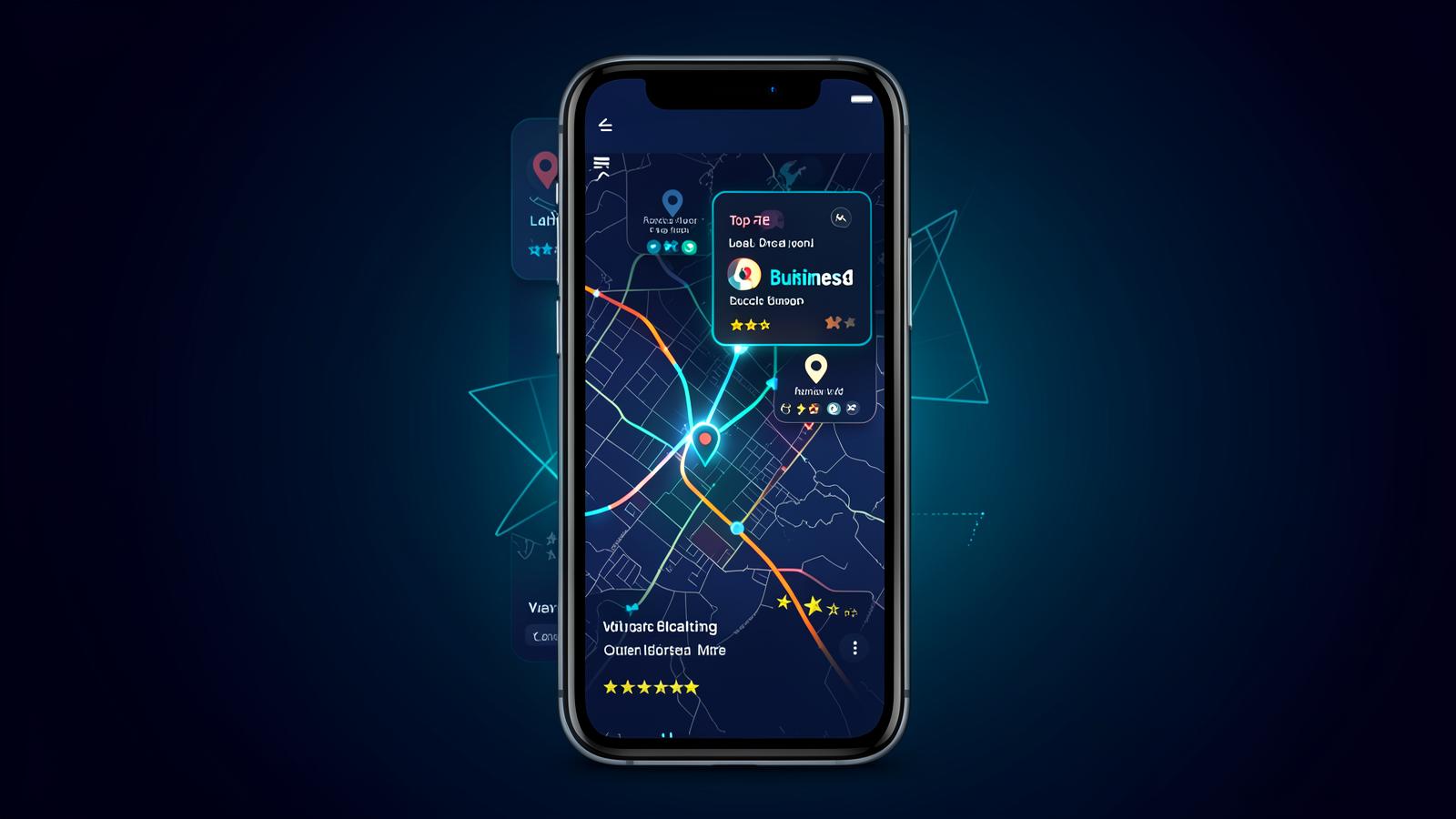
When someone searches 'dentist near me' or 'plumber near me', the three businesses that show up in the Google Maps local pack capture the overwhelming majority of clicks and calls, while everyone else on page one of the map results is left hoping for scraps. Getting into that top three, or even the top ten within the full Maps results, is not random luck or a paid placement. It is the outcome of specific, measurable signals that Google evaluates every time someone runs a local search.
Most business owners approach Google Maps ranking backwards. They obsess over their star rating in isolation, or assume that simply having a Google Business Profile is enough, without understanding that Maps ranking is a live competition against every other business claiming the same category, service area and keywords. Improving your position means diagnosing which of the three core ranking inputs, relevance, distance and prominence, is actually holding you back, then fixing that specific gap rather than guessing at generic tips.
This guide breaks down how Google Maps ranking actually works, then walks through the concrete, prioritized actions that move the needle: profile optimization, category selection, review strategy, citations, website relevance and the mistakes that quietly cap your visibility. Along the way we use real search examples, from dentists to wedding planners, to show how the same framework plays out differently by industry. If you want a broader view of local SEO across the Chandigarh tricity and Delhi markets, our related guide on local SEO services in Chandigarh, Mohali, Panchkula and Delhi covers the regional landscape in more depth, and our comparison of local SEO versus Google Ads for local businesses explains how the two channels work together rather than compete.
How Google Maps Ranking Actually Works
Google has publicly stated that Maps ranking is determined by three factors working together: relevance, distance and prominence. Relevance measures how well your Business Profile matches what the searcher typed, based on your category, business description, services and the keywords in your reviews. Distance measures how close your listed address or service area is to the searcher's location or the location implied in their query, such as 'plumber in Sector 34 Chandigarh'.
Prominence is the factor most businesses underestimate. It reflects how well-known and well-regarded your business is, both online and offline, and it draws on review volume, review score, citation consistency, backlink authority, and general information Google can find about you across the web. A business with a mediocre website but hundreds of recent, detailed reviews and consistent citations will often outrank a business with a beautiful website and no review activity, because prominence carries real weight.
The practical implication is that you cannot fix a Maps ranking problem with a single tactic. If you are close to the searcher but still not appearing, the issue is almost always relevance or prominence, not distance, because distance is largely outside your control. Diagnosing which lever is weak, rather than applying every tip evenly, is what separates efficient local SEO work from wasted effort.
Google Business Profile: The Foundation You Cannot Skip
Every Maps ranking signal is filtered through your Google Business Profile, which means an incomplete or poorly structured profile puts a ceiling on everything else you do. Claim and verify your profile first, then treat every field as a ranking input rather than a formality. Google rewards profiles that give it unambiguous, complete information because that reduces the risk of showing a searcher a business that turns out to be the wrong fit.
The fields that matter most for relevance are your primary category, your business description, your services list, and your business attributes. Fields that matter most for prominence are your review activity, your photo volume and freshness, and how frequently you post updates. Treat profile completion as an ongoing task, not a one-time setup step, because Google can detect abandoned profiles through inactivity.
- Business name exactly as it appears on your signage and legal documents, with no keyword stuffing.
- A specific, accurate primary category rather than a broad catch-all category.
- A complete, natural-language business description that mentions your core services and service area once each.
- Services listed individually with short descriptions rather than a single bulk list.
- Accurate hours, including holiday hours kept current throughout the year.
- A defined service area for businesses that travel to customers rather than a storefront-only model.
Choosing the Right Primary Category
Your primary category is one of the strongest relevance signals Google uses, and choosing a category that is too broad is one of the most common reasons businesses fail to appear for their most valuable searches. A general contractor who primarily does bathroom remodels will struggle to rank for 'bathroom remodeling near me' if their primary category is simply 'General contractor,' because Google matches category taxonomy to query intent whenever a close match exists.
Secondary categories help you capture adjacent searches without diluting your primary relevance, but they should reflect services you genuinely offer, not aspirational ones. Adding categories you cannot deliver on invites poor reviews and does not help long-term rankings.
| Business type | Weak primary category | Stronger primary category |
|---|---|---|
| Dental practice focused on implants | Dentist | Dental implants periodontist |
| Emergency plumbing business | Plumber | Emergency plumbing service |
| Full-service car wash with detailing | Car wash | Car detailing service (plus Car wash as secondary) |
| Residential AC repair company | HVAC contractor | Air conditioning repair service |
| Boutique wedding planning studio | Event planner | Wedding planner |
Services List and Business Description
The services section is frequently left blank or filled with a single generic line, which wastes one of the clearest relevance signals available. Each service should have its own entry with a short, specific description that mirrors how customers actually search, using natural phrasing rather than internal jargon.
For a dentist, that means separate entries for teeth cleaning, root canal treatment, dental implants and cosmetic veneers rather than one line reading 'general dentistry.' For a wedding planner, it means separating full-service planning, day-of coordination and destination wedding packages. The business description should then tie these services together in plain language, mentioning your service area once, without repeating keywords artificially.
Defining Service Areas Correctly
Service-area businesses, such as plumbers, AC repair technicians and mobile car wash operators, need to define their service area precisely inside Google Business Profile rather than relying on a single storefront address to imply reach. An undefined or overly broad service area confuses the distance factor and can cause Google to suppress a listing for queries outside a narrower zone it infers on its own.
List service areas by city or named locality rather than a broad radius alone, especially in dense metro areas where neighborhoods matter more than kilometers. An AC repair business covering both Mohali and Panchkula should list both explicitly rather than assuming a radius search from a Chandigarh address will capture them, since searcher intent is often typed with a specific place name attached.
Reviews: Volume, Recency and Response Quality
Reviews influence Maps ranking through prominence, but they also directly influence conversion once a searcher sees your listing, which is why review strategy deserves more structure than an occasional reminder email. Recency matters as much as total volume; a business with 200 reviews from three years ago and none since sends a weaker prominence signal than a business steadily adding a handful of new reviews every month.
Build review requests into your operational workflow rather than treating them as an afterthought. A text message sent within a day of service completion, with a direct link to your review page, converts far better than a generic email sent weeks later. Responding to every review, not just negative ones, shows Google and prospective customers that the profile is actively managed.
- 1Send a review request within 24 to 48 hours of job or service completion, while the experience is fresh.
- 2Make the request specific, asking customers to mention the service they received if comfortable doing so.
- 3Respond to every new review within a few business days, thanking positive reviewers and addressing concerns in negative ones professionally.
- 4Never offer incentives in exchange for reviews, since this violates Google's policies and risks profile suspension.
- 5Track review velocity monthly and treat a slowdown as a signal to revisit your request process.
Photos and Visual Content
Photos affect both relevance and prominence, and profiles with regularly updated photos tend to receive more customer engagement, which itself feeds back into how active Google perceives the listing to be. Generic stock photography or a single set of images uploaded at verification and never updated again signals stagnation.
Upload photos that show real work, real premises and real staff, categorized correctly within Google's photo tagging options. A car wash should show before-and-after detailing results, not just the exterior signage. A dentist's office benefits from photos of the waiting area and equipment that reduce patient anxiety, since Maps listings are also a trust decision, not only a ranking exercise.
Website Relevance and Location Landing Pages
Google cross-references your website content against your Business Profile to validate relevance, which means a thin or outdated website can quietly undermine an otherwise strong profile. Your website should reinforce the same services, categories and locations listed on your profile, in enough depth that Google can confirm the match with confidence.
Multi-location or multi-area businesses benefit from dedicated location landing pages rather than a single generic contact page, provided each page contains genuinely unique content about that location's service area, team and relevant details, not a duplicated template with only the city name changed. Thin duplicate location pages tend to underperform a single strong page, so prioritize depth over volume.
Not sure whether your website is reinforcing or undermining your Maps ranking?
Request a Google Business Profile reviewLocal Keywords That Actually Match Search Intent
Local keyword research for Maps ranking is less about search volume and more about matching the exact phrasing customers use when they need a business urgently or are comparing options nearby. 'AC repair near me' and 'same day AC repair' represent different intents and often different levels of urgency, and your website and profile content should speak to both.
Instead of guessing, review the search terms already appearing in your Google Business Profile performance data, which shows the actual queries triggering your listing's impressions. This is often the most accurate, lowest-effort keyword research available, since it reflects real searcher behavior rather than assumptions.
Local Citations and Directory Consistency
Citations, meaning mentions of your business name, address and phone number on other websites, help confirm your location and legitimacy beyond your own website and Google profile. Prioritize accuracy on a smaller number of relevant, high-authority directories over bulk submissions to low-quality sites that add little trust and can even introduce conflicting information.
For service businesses like plumbing and AC repair, industry-specific directories carry additional weight because they signal category relevance in addition to location. For dentists and other healthcare providers, medical directories serve the same purpose. Keep a master document of your canonical NAP format and check new citations against it before publishing.
NAP Consistency: A Small Detail With Outsized Impact
Inconsistent name, address or phone number formatting across the web is one of the most common, and most avoidable, reasons a business plateaus in Maps rankings despite otherwise solid effort elsewhere. A phone number listed with a missing digit on one directory, or an old address still live on another, creates ambiguity that erodes the confidence Google places in your listing.
Run a periodic audit by searching your business name and city, then manually checking the first fifteen to twenty results for outdated details. Correct discrepancies at the source rather than only updating your own website, since third-party listings often carry as much or more weight in Google's evaluation.
Local Backlinks and Off-Site Relevance
Backlinks from other local businesses, organizations and news sources carry more local relevance weight than generic backlinks from unrelated, distant websites, because they reinforce your geographic and community ties in a way Google can verify independently of your own claims.
Sponsoring a local event, joining a local trade association, or being featured in a regional news story about your industry all generate this kind of link naturally. Cross-promotion with complementary, non-competing local businesses, such as a wedding planner linking to a preferred venue and vice versa, is an underused but effective way to build this signal over time.
Broader Local Relevance Signals
Beyond citations and backlinks, Google appears to weigh a range of softer local relevance signals, including how often your business is mentioned alongside your city or neighborhood name across the web, whether your content discusses local landmarks or areas naturally, and whether your social profiles reflect consistent location information.
None of these signals alone will move rankings dramatically, but together they build a body of evidence that reinforces the geographic and category relevance already established through your profile and website. Treat them as reinforcement rather than a primary strategy.
Analyzing Competitors in the Local Pack
Before investing further effort, look closely at the businesses currently outranking you for your priority searches. Compare their primary category, review count and recency, photo volume, and whether their website content matches their profile claims. This comparison usually reveals which specific gap is costing you the most visibility.
If a competitor with fewer reviews than you still outranks you, the gap is likely relevance, meaning their category or service descriptions match the query more precisely. If a competitor with a similar profile but far more reviews outranks you, prominence is the more likely bottleneck, and review generation should become the priority.
Location Signals and the Limits of Proximity
Because distance is a core ranking factor, no amount of optimization will make a business in one part of a city consistently outrank a closer, comparably strong competitor for a searcher standing a few blocks from that competitor. This is an important expectation to set early, since businesses sometimes interpret a strong ranking near their own location as underperformance simply because they rank lower a significant distance away.
The realistic goal is to dominate your immediate service area and rank competitively at the edges of it, rather than expecting to rank first everywhere for a citywide search. Service-area businesses can extend effective reach by ensuring every area they genuinely serve is explicitly listed and reinforced with area-specific content on their website.
Common Google Maps SEO Mistakes
Most Maps ranking problems trace back to a small set of recurring mistakes rather than exotic technical issues. Recognizing which of these applies to your profile is often more valuable than adding new tactics on top of an unresolved foundational problem.
| Mistake | Why it hurts ranking | Fix |
|---|---|---|
| Keyword stuffing the business name field | Violates Google's guidelines and risks suspension | Use your legal business name only |
| Choosing an overly broad primary category | Weakens relevance for your most valuable searches | Select the most specific accurate category available |
| Ignoring negative reviews | Signals inactive profile management and hurts conversion | Respond professionally within a few days of every review |
| Duplicate or fake listings for the same address | Splits prominence signals and can trigger suspension | Audit for and remove duplicate profiles |
| Static photos never updated | Signals a stagnant, inactive profile | Upload new, real photos monthly |
| Undefined or overly broad service area | Confuses distance matching for service-area searches | List specific localities served, not just a radius |
Worked Examples Across Industries
The same framework produces different priorities depending on the industry. A dentist competing for 'dentist near me' typically needs the strongest prominence signals, since dental searches are trust-heavy and review-dependent, alongside a specific primary category like a treatment specialty if that reflects their focus.
A plumber competing for 'plumber near me' usually needs the tightest service-area definition and fastest review response time, since emergency searches favor businesses that appear both close and immediately responsive. A car wash competing locally benefits most from fresh photos and Google Posts showing current promotions, since these searches are often impulse-driven and visually influenced. An AC repair company sees the largest gains from seasonal profile activity and explicit service-area listings across every locality served, since demand is highly time-sensitive. A wedding planner, competing in a lower-volume but higher-value search, typically benefits most from a detailed services list and a portfolio of photos that differentiate their style from competitors.
Why Location-Specific Strategy Matters in the Tricity and Delhi
Businesses operating in Chandigarh, Mohali and Panchkula face a search pattern shaped heavily by the sector and phase system used across these cities, where customers frequently search by sector number in Chandigarh and Panchkula, or by phase in Mohali, rather than by neighborhood name alone. A business that only optimizes for the city name broadly, without reinforcing the specific sectors or phases it serves, misses a large share of the most precise, highest-intent searches in this market.
Delhi presents a different challenge: an extremely high density of competing businesses spread across dozens of well-known localities, each functioning almost like its own micro-market for local search. A business in Delhi competing only on a citywide basis will struggle against competitors who have built prominence and relevance specifically within their own locality. In both cases, the fix is the same principle applied at a finer grain, defining service areas precisely, referencing specific sectors, phases or localities in website content, and building citations and reviews that reinforce that exact geography rather than the city as a whole. Our dedicated guide to local SEO services across Chandigarh, Mohali, Panchkula and Delhi goes deeper into how this plays out market by market.
Organic Maps Ranking Versus Paid Visibility
It is worth being clear about what organic Maps optimization can and cannot do quickly. Improving your organic ranking through the steps above is a compounding process that typically plays out over months, not days, because Google needs time to observe consistent signals before adjusting its confidence in your listing. If you need visibility in a specific area immediately, particularly during a launch or a seasonal demand spike, paid local search ads can fill that gap while organic signals build in the background.
We cover this tradeoff in detail, including when each approach makes sense and how they complement each other, in our comparison of local SEO versus Google Ads for local businesses.
How a Professional Local SEO Agency Helps
Diagnosing whether your Maps ranking gap is relevance, distance or prominence, and then executing the right fix consistently over months, is straightforward in concept but time-consuming in practice for a business owner already running daily operations. An experienced local SEO team brings a structured audit process, benchmarks your profile against the competitors actually outranking you, and manages the ongoing cadence of reviews, citations, content and reporting that most businesses struggle to sustain alone.
This is particularly valuable for multi-location businesses or businesses in dense, competitive markets like Delhi, where manual trial and error is slower and more expensive than a targeted strategy built around specific data from your Business Profile insights and competitor analysis.
Key takeaways
- Google Maps ranking is driven by relevance, distance and prominence, and diagnosing which one is weak matters more than applying every tactic evenly.
- Choosing the most specific accurate primary category is one of the highest-leverage relevance decisions you can make.
- Review recency and response quality matter as much as total review volume for prominence.
- Service-area businesses should explicitly list every locality served rather than relying on a broad radius alone.
- NAP consistency and citation accuracy quietly cap rankings when neglected, even with strong reviews elsewhere.
- Thin, duplicated location pages tend to underperform a smaller number of genuinely unique pages.
- Sector, phase and locality-level precision matters in markets like Chandigarh, Mohali, Panchkula and Delhi far more than city-level targeting alone.
- Common Maps SEO mistakes, like keyword-stuffed business names or duplicate listings, risk profile suspension rather than just poor ranking.
Frequently asked questions
Most businesses see measurable movement within a few months of consistent optimization, though highly competitive categories and dense markets can take longer. Google Business Profile changes and review activity tend to show impact faster than citation and backlink work.
Conclusion
Ranking higher on Google Maps is rarely about finding one overlooked trick; it is about correctly diagnosing whether relevance, distance or prominence is holding your listing back, then addressing that specific gap with consistent, accurate work over time. Businesses that treat their Google Business Profile, reviews, citations and website as one connected system, rather than isolated tasks, tend to build a Maps presence that holds up even as competitors come and go.
If you want a clear picture of exactly where your Google Business Profile and Maps visibility stand today, and which specific gaps are costing you the most searches, we are happy to take a look and walk you through what we find, no obligation attached.
Want this done for you?
Book a free strategy call and we will review your site, your search visibility and your ad accounts, then tell you the three highest-impact things to fix first.
About the author
Gurpreet leads strategy and delivery at CSSHouse Consulting, where he has spent the last decade building websites and search programs for service businesses, SaaS teams and ecommerce brands across India, the UK and North America.
Work with our teamRelated articles
Local SEO Services in Chandigarh, Mohali, Panchkula & Delhi: A Complete Guide for Local Businesses
Everything a business in Chandigarh, Mohali, Panchkula or Delhi needs to know about local SEO, from Google Business Profile to Maps rankings and reviews.

Local SEO vs Google Ads: Which Is Better for Local Businesses?
A clear-eyed comparison of local SEO and Google Ads for local businesses, covering cost, speed, trust and which channel fits which situation.
The Complete Local SEO Checklist for Small Businesses
A practical, step-by-step local SEO checklist that helps small businesses rank higher in Google Maps and local search results.
One useful email, twice a month.
Search, AI visibility, paid media and conversion insights from live client work. No fluff, no recycled listicles — unsubscribe any time.